

A wind threw the door onto him, shoving him against the stack. And night spilled in. Snow stung his face. He forced the door against the wind and the latch clanged shut. He clung to the chimney post. But night was in the room, a sheet of darkness, flapping from wall to wall. It changed shape, swirling, flowing. It dropped to the ground and ruckled over the floor bricks; then up to the joists and beams of the ceiling; hung, fell, humped. It shrieked, reared against the chimney opening, but did not enter. It surged through the house by cracks and gaps in the timbers, out under the eaves. There was a whispering, silence; and on the floor snow melted to tears.
'My name,' said the man, 'is Treacle Walker.'
Home Page | Reading Schedule | Further Resources
Welcome to Week 1 of a slow read of Treacle Walker by Alan Garner. I am your guide, Simon Haisell, and this is Footnotes & Tangents, a book group where we take our time to live inside great stories.
Each week, I offer you my footnotes and tangents. You will have your own, and I encourage everyone to treat the slow read as an opportunity to explore, reflect and create. You can join the discussion in the comments to let us know what caught your eye or ask the group any questions you may have. And if you’ve tumbled down a rabbit hole or taken your reading off on a tangent, please share where you have been and what you have found.
This week, we are reading chapters I–VI. On my website, there is a reading schedule and a page of further resources.
This first post is free, and you can become a member of Footnotes & Tangents to read the rest of the series and join the discussion.
To get these posts in your inbox, subscribe to Footnotes & Tangents and turn on notifications for “2026 Treacle Walker” in your subscription settings. More help with emails.
Introducing: Alan Garner
We have to tell stories to unriddle the world.
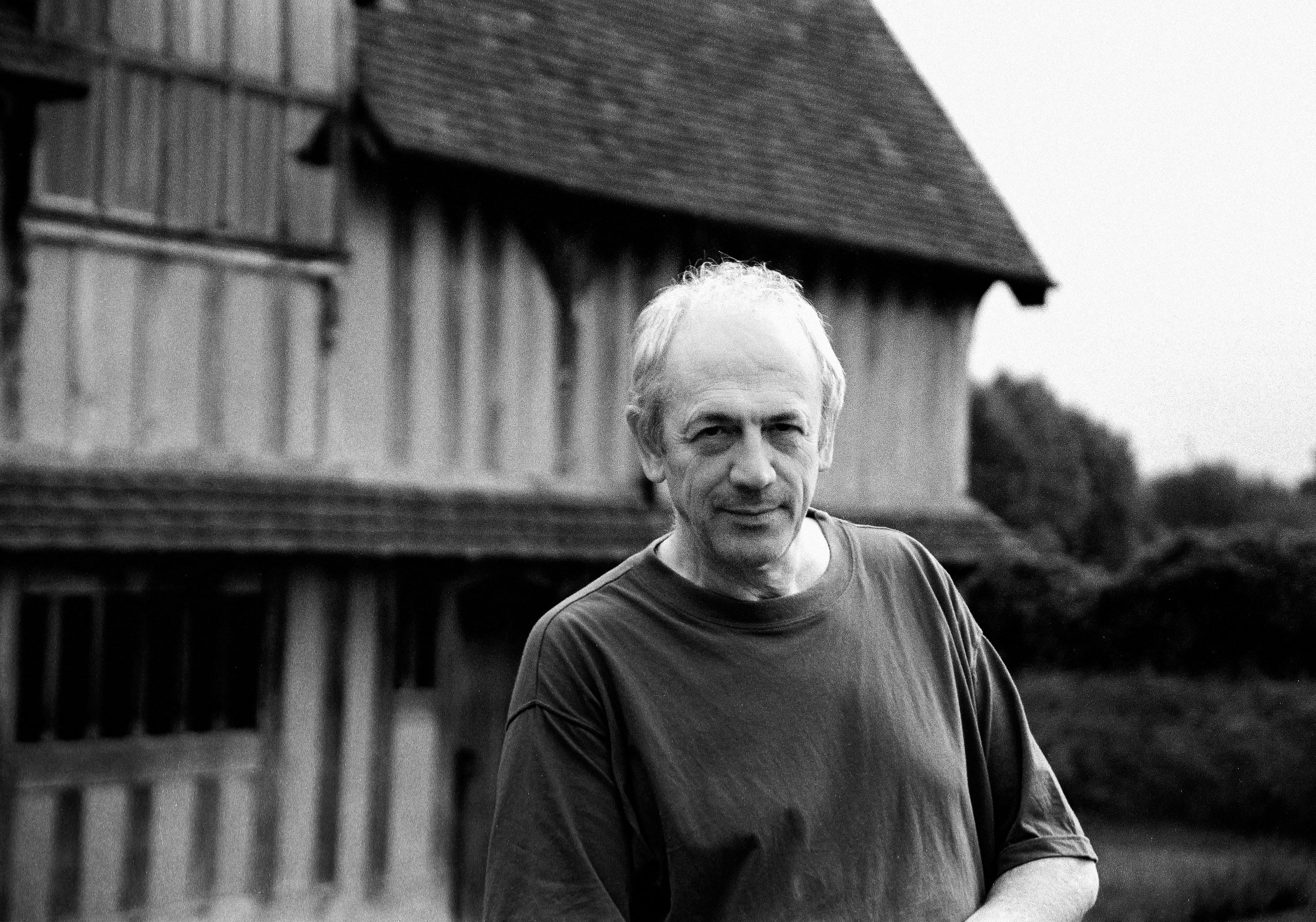
Alan Garner was born in 1937 in Cheshire in the North West of England. He was raised at Alderley Edge in a family of proud local craftsmen whose relationship with the area goes back to at least the sixteenth century. Garner’s great-grandfather was a stonemason, and Garner wrote about his family in The Stone Book Quartet. His grandfather gave him two precepts for life:
One. “Always take as along as the job tells you; because it’ll be here when you’re not, and you don’t want folk saying, ‘What fool made that codge?’”
Two. “If the other feller can do it, let him.”
Alan Garner was the first of his family to receive secondary education, studying at Manchester Grammar School (Treacle Walker is dedicated to MGS). He studied Classics at Oxford. His education gave him an intellectual rigour and fed his love for research, but he felt out of place and dissatisfied by the direction academia was taking him. He returned home to Alderley to write.
He published his first novel, The Weirdstone of Brisingamen, in 1956 and its sequel, The Moon of Gomrath, in 1963. Embedded in the local mythology of Alderley Edge, these books established his reputation as a writer of fantasy and folklore for children.
However, Garner insisted “I did not write for children, but entirely for myself.” His books emerged slowly from the initial spark generated by two or more disparate ideas, years of research and the creative work of the unconscious. With the exception of The Owl Service, which is set in Wales, all his books are rooted in the landscape visible from his house. Indeed, he describes himself as “a man of his square mile” and an extension of that landscape.
In 2011, Garner finished what he called his “final” book, Boneland, which completes the trilogy that began with The Weirdstone of Brisingamen. Garner wrote:
People asked: Why did it take so long? The only answer I could give was: Because that is how long it took. But the true answer is: I had to write six other books first. It is not just a trilogy. The nine novels are all one unconscious arc, forming a single work that is resolved and consummated in the last line of Boneland; which I did not see until it ran off my pen and was done.
But Boneland was not Garner’s last book. Soon after, he was walking with a friend across an Iron Age fort near Huddersfield. His friend, a theoretical physicist, was perplexed about where Garner’s ideas came from.
He said something inconsequential about a tramp who used to work around the farms near Slaithwaite. This tramp claimed to be able to heal all ills except jealousy. His name was Arthur Helliwell, but he was known as ‘Treacle Walker’.
Garner looked at his watch. “Well, just make a note that on the afternoon of Sunday 15 July 2012, you’ve given me an idea, and you’ve given me a book.”
More: England’s time lord
Interview: Mind out of Time
Profile: Alan Garner at 90
The story this week
It is midday when the rag-and-bone man comes to see Joseph Coppock. He offers Joe a donkey stone and “pots for rags”. Joe gives him his old pyjamas and a lamb’s shoulder. The man gives him choice from a chest that bears his name. Joe chooses “the least … of little price”, a white jar inscribed with the label, “Poor Mans Friend.” He is also given a donkey stone with the outline of a horse cut into one side. He invites the man into his home.
Joe tells him about his lazy eye, and he notices the man’s strange appearance. Something bangs three times three on the door, and when Joe lifts the latch, night spills in. “A hurlothrumbo of winter”, the man calls it. “Nothing more.” The man gives his name. It is Treacle Walker. He heals “all things; save jealousy. Which none can.”
Treacle Walker takes a bone flute from his bag and plays a tune. When Joe plays the bone, it is the cuckoo's call, and a cuckoo answers. Treacle Walker instructs him to draw a pail of water and to “stone the step” with his donkey stone. He washes his doorstep and sees his name. He marks the step with his stone.
It is midday again, or isn’t it? Joe Coppock calls for Treacle Walker, but no one is there. His step gleams white, the lamb’s shoulder is gone, and instead he has the stone and the jar. Poor Man’s Friend. Inside there are traces of a paste. He rubs it on his finger. A cuckoo calls from the alder bog by the brook. He follows the call. He lifts his patch and rubs his good eye. Jagged light and pain fill his head. He returns to his house.
Joe is being seen by an optician. His lazy eye cannot read the letters, but his good eye sees letters that are not there. He writes them down and takes them home. He can make no sense of it. He follows the call of the cuckoo down to the alder bog. The cuckoo is everywhere, and through his good eye the small copse becomes a forest without end.
A man sits up in the bog. He tells Joe he was the glamourie in his good eye, and shows him how to see with both to get himself home. Joe tells the bog man he collects eggs and is trying to bag himself a cuckoo’s egg. “I wish you the luck on it there,” says the man. He helps Joe home and gives him his name, Thin Amren, and gives him a riddle: “Put the clout to the glamourie and use the glim that’s in the mirligoes.” Joe runs.

This week’s theme: And night spills in
   'Who are you?' said Joe.
   'Who? What?' said the man. 'Is there a difference?'
   'Can you not talk sense? What's your name?'
Strange things happen in stories. Snow and night break into a house in the middle of the day when the sun shines. Strangers know your name, and men sit up in bogs from a thousand years of sleep.
Treacle Walker presents itself as a riddle. Everything is simple, but nothing is obvious. You may be puzzled, confused and confounded. This is a good place to be. Alan Garner’s writing is concerned with capturing essential truths that elude the literal, rational conscious mind. In his essay, “Achilles in Altjira”, he writes:
The function of the storyteller is to relate the truth in a manner that is simple; for it is rarely possible to declare the truth as it is, because the universe presents itself as a Mystery. We have to find parables, we have to tell stories to unriddle the world. It is yet another paradox. Language, no matter how finely worked, will not speak the truth. What we feel most deeply we cannot say in words. At such levels only images connect; and hence story becomes symbol.1
As such, Treacle Walker is the creative work of Alan Garner’s unconscious. Who then is Joe Coppock and who is Treacle Walker? Garner told The Guardian, “Joseph Coppock is the me I could have become if I’d not had the severe academic training that I did. Treacle Walker is what I could have become if I hadn’t jumped ship at Oxford and got off the road to academia.”
Joe is the sickly, unschooled Cheshire kid. Treacle Walker is the esoteric intellectual, intelligible only to himself.
But that is just one interpretation. Alan Garner again:
I would say that, because of its essential ambivalence, “literature” is: words that provoke response; that invite the reader or listener to partake of the creative act. There can be no one meaning for a text. Even that of the writer is but an option.
Reading is a creative act. And the riddle has many answers.
What lies before you then is an invitation to create. Every book worth its salt contains such an invitation. Your reading may lead outwards to learn more about the world, or inwards to learn more about yourself. Treacle Walker can do both. Be curious and creative and make your own footnotes and tangents. Here are mine.
Footnotes and tangents
1. “Time is an illusion, lunchtime doubly so.”
The quote is from Douglas Adams’ Hitchhiker’s Guide to the Galaxy. The comic aphorism seems appropriate for Treacle Walker, where we are told twice in the first six chapters that it is Midday, yet we are eerily aware that time is not behaving itself.
Time is ignorance.
The novel’s epigraph quotes the Italian theoretical physicist Carlo Rovelli from his book The Order of Time. Rovelli argues that at the level of quantum mechanics time does not exist. Time appears linear because of our limited information about the world. Here is the quote in full:
Temporality is profoundly linked to blurring. The blurring is due to the fact that we are ignorant of the microscopic details of the world. The time of physics is, ultimately, the expression of our ignorance of the world. Time is ignorance.
This recalls Joe Coppock’s blurred vision caused by a Lazy Eye: “I must wear the patch over the good one”, he tells Treacle Walker, “so the other will catch up.” His two eyes see time differently. Treacle Walker gives him a jar containing green violet paste, the same colour as Treacle Walker’s eyes. When it gets in Joe’s good eye, it transforms his sight. Here is Rovelli again:
We are stories, contained within the twenty complicated centimetres behind our eyes, lines drawn by traces left by the (re)mingling together of things in the world, and oriented toward predicting events in the future, toward the direction of increasing entropy, in a rather particular corner of this immense, chaotic universe.
Time is Ignorance: From C.S. Lewis to Carlo Rovelli (Ali J.P. Miller)
Watch: Carlo Rovelli on the nature of time (New Scientist)
A cursory or careless reading of Treacle Walker may mistake the story for whimsy; childish nonsense.2 Yet everything here is placed with purpose. Alan Garner always works where art and science meet. Quite literally. The place where he writes is intimately concerned with time, history, prehistory, and our comprehension of the cosmos:
Since 1957 I have lived and worked in a medieval house on a burial mound four thousand years old. And the site has been occupied since the end of the latest Ice Age, ten thousand years ago. When I came to live on the mound, I coincided with the completion, three fields away, of the Lovell telescope.3
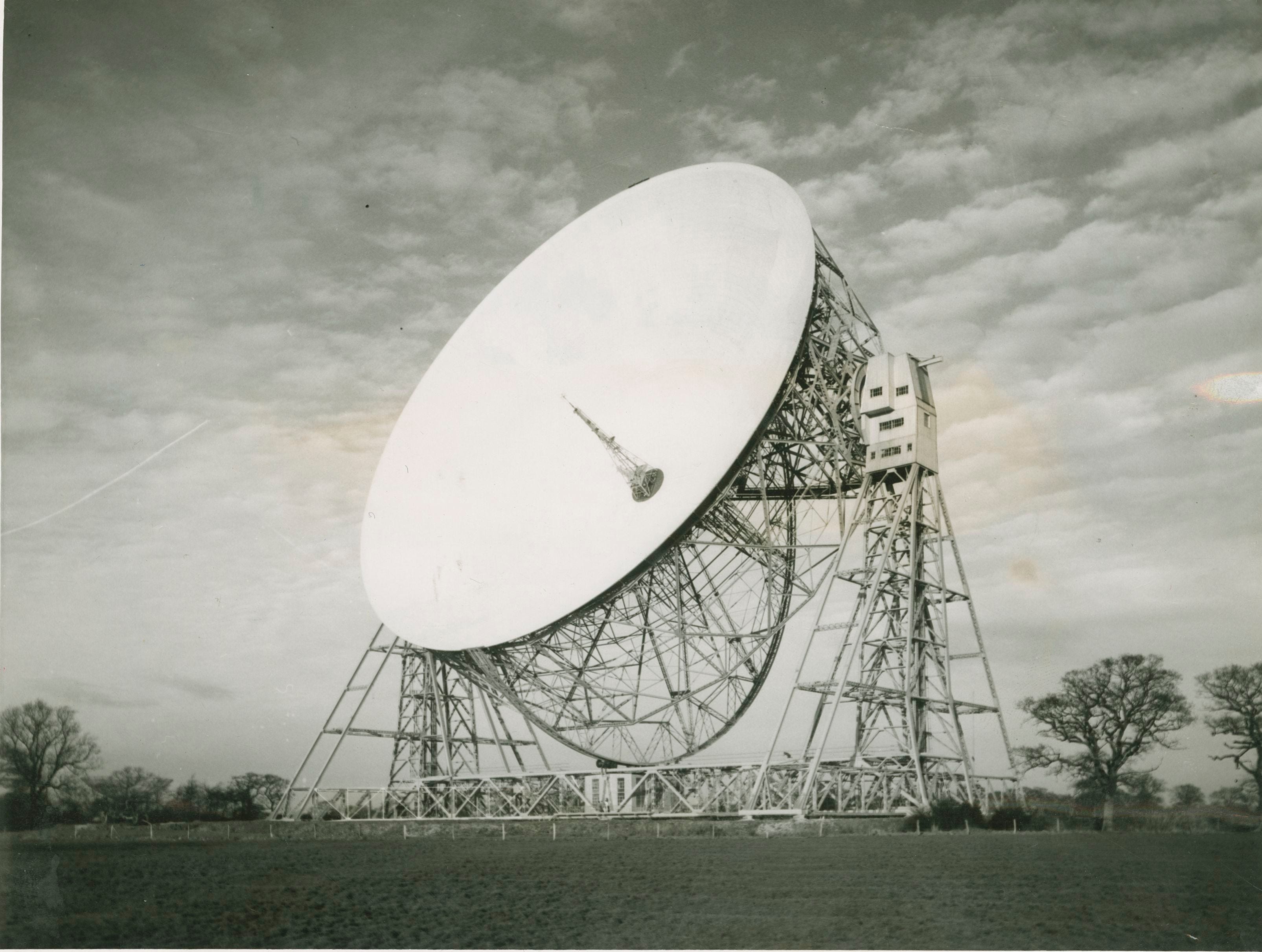
More on that medieval house later. Garner ardently believes in the essential need for art and science to communicate. His relationship with the Lovell Telescope began rather bruskly when he brought an Early Bronze Age stone axe to Sir Bernard Lovell’s office and declared: “This is the telescope.” Lovell feared it was a bomb. Years later, in 2015, at the inaugural Garner Lecture at the Jodrell Bank Observatory, Garner explained himself:
The axe is a first meddling with the Universe by our intelligence. Intelligence took what was and changed it, to make it work better. Once that has happened, the telescope becomes inevitable. Idea leads to idea in a chain reaction of discovery that won’t be stopped. Eve will pick the apple. Pandora cannot shut the box. We are the ape that asks, “What’s next?”4
2. Nothing wasted
What on earth did we do before waste management? For millennia, we had middens, but the rubbish kept building up. In the 1880s, the authorities in Paris pioneered the first municipal rubbish bins. The innovation was resisted by the city’s ragpickers, an urban underclass who made their living collecting other people’s waste. A French newspaper in 1870 wrote that they “represent primitive mankind in the big city, blissfully ignorant of laws … retiring from society like a troglodyte of the caves.”5 In contrast, Charles Baudelaire saw poetry in their recycling of the rubbish of modern existence. He wrote:
One sees a ragpicker knocking against the walls,
Paying no heed to the spies of the cops, his thralls,
But stumbling like a poet lost in dreams;
He pours his heart out in stupendous schemes.
When the philosopher Walter Benjamin assembled his magnificent Arcades Project, a vast study of nineteenth-century Paris, he invoked the ragpicker. He gathered ideas, quotes, scraps of history to make new use of them:
Everything that the big city has thrown away, everything it has lost, everything it has scorned, everything it has crushed underfoot he catalogues and collects. He collates the annals of intemperance, the capharnaum of waste. He sorts things out and selects judiciously: he collects like a miser guarding a treasure, refuse which will assume the shape of useful or gratifying objects between the jaws of the goddess of Industry.
Also known as the bone-grubber and the rag-and-bone man, he is the bricoleur for whom nothing is wasted. The tinker or the handyman, working with odds and ends. Footnotes and tangents. Alan Garner’s ancestors were handloom weavers who sold their own woven lengths at market. The snippets of cloth leftover were known as “powsels and thrums” and could always be made into something new.
Garner compares his own craft to theirs, the weaving of warp and weft, of history and myth. Powsels and thrums gather in the mind and thread together to make new stories.
The magus speaks: Powsels and Thrums by Alan Garner
In England the rag-and-bone men continued to work the streets until the middle of the last century, often with a horse-pulled cart and the refrain that opens this novel: “Ragbone! Ragbone!” A rag-and-bone man may be an outsider, an object of suspicion and a walking indictment of the amiseration of modern life. But he is also resourceful, a recycler and his own man. His appearance is no offence to himself. Joe says:
   'You smell.'
   'Not I, Joseph Coppock,' said the man. 'You smell that I stink. Let words be nice.'
3. Stone the step and keep the house
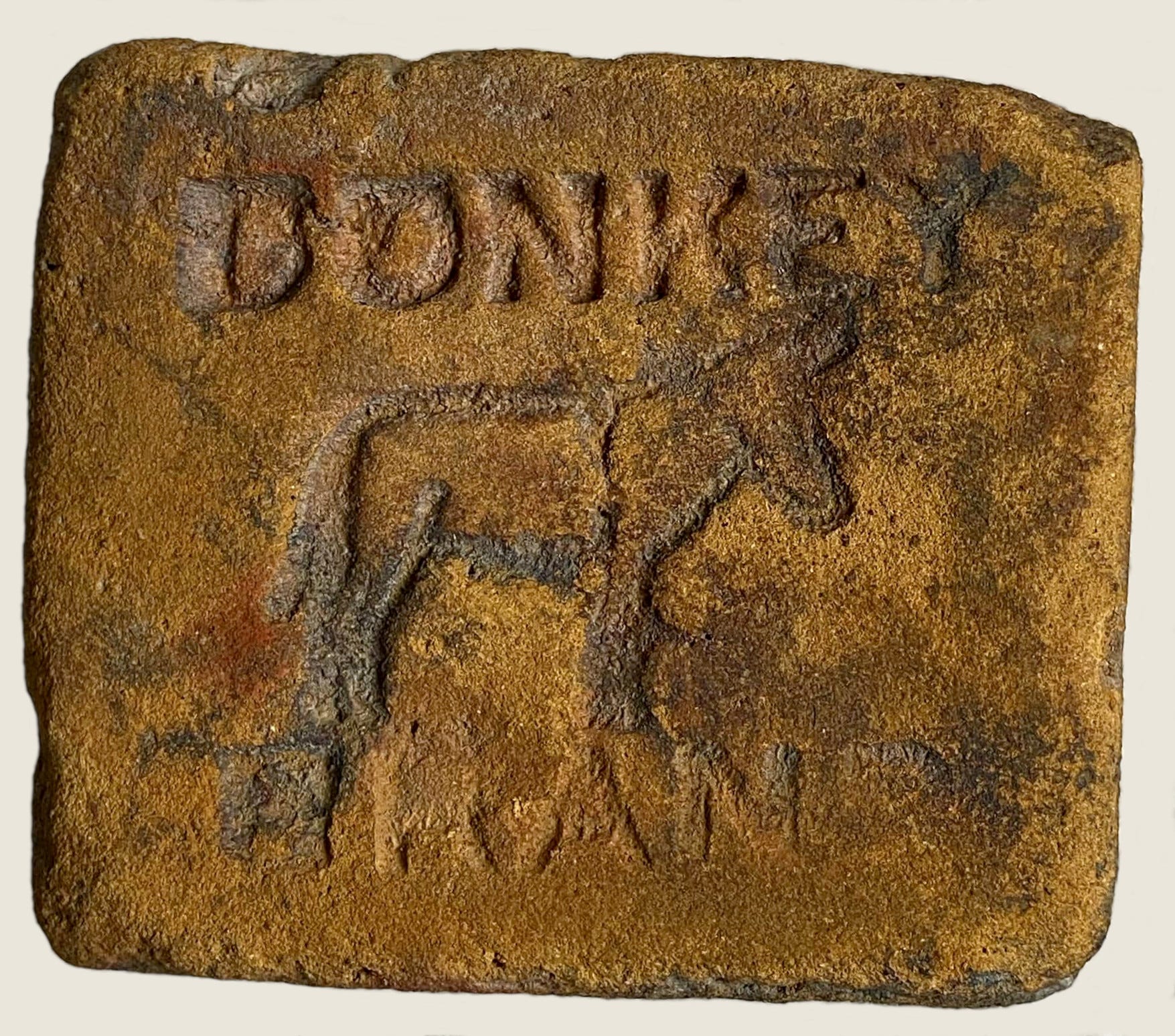
In the milltowns of northern England, rag-and-bone men gave out donkey stones in return for old rags. These were scouring blocks made from pulverised stone, cement, and bleach powder. They were first used in textile mills but became popular among housewives for cleaning and decorating their doorsteps. Donkey stones left a brown or white decorative mark so that all your neighbours could see that your house was well kept.
Back in 1997, 85-year-old Margaret Halton of Blackburn told the Lancashire Telegraph:
It was lovely to see a street with all the doorsteps donkey-stoned and the stone flags outside swilled clean with washing soda and water. With a donkey stone, you could make your doorstep look like marble. Everybody used to do theirs for the weekend. Even the poorest of the poor would stone in those days.
Precious stones: Another tradition fades away (Lancashire Telegraph)
When Treacle Walker entered Joe’s house, he “paused and looked at the step as he crossed the threshold.” Thresholds are dangerous, liminal spaces. The wise will mark them well to prevent the unwanted from getting in. Joe’s house, Treacle Walker observes, is not well kept: “a hurlothrumbo of winter” enters with ease. “To keep the house”, Joe must “stone the step.”
4. Noony and Toad Hall
Joe looked up from his comic and lifted his eye patch. Noony rattled past the house and the smoke from her engine blew across the yard. It was midday. The sky shone.
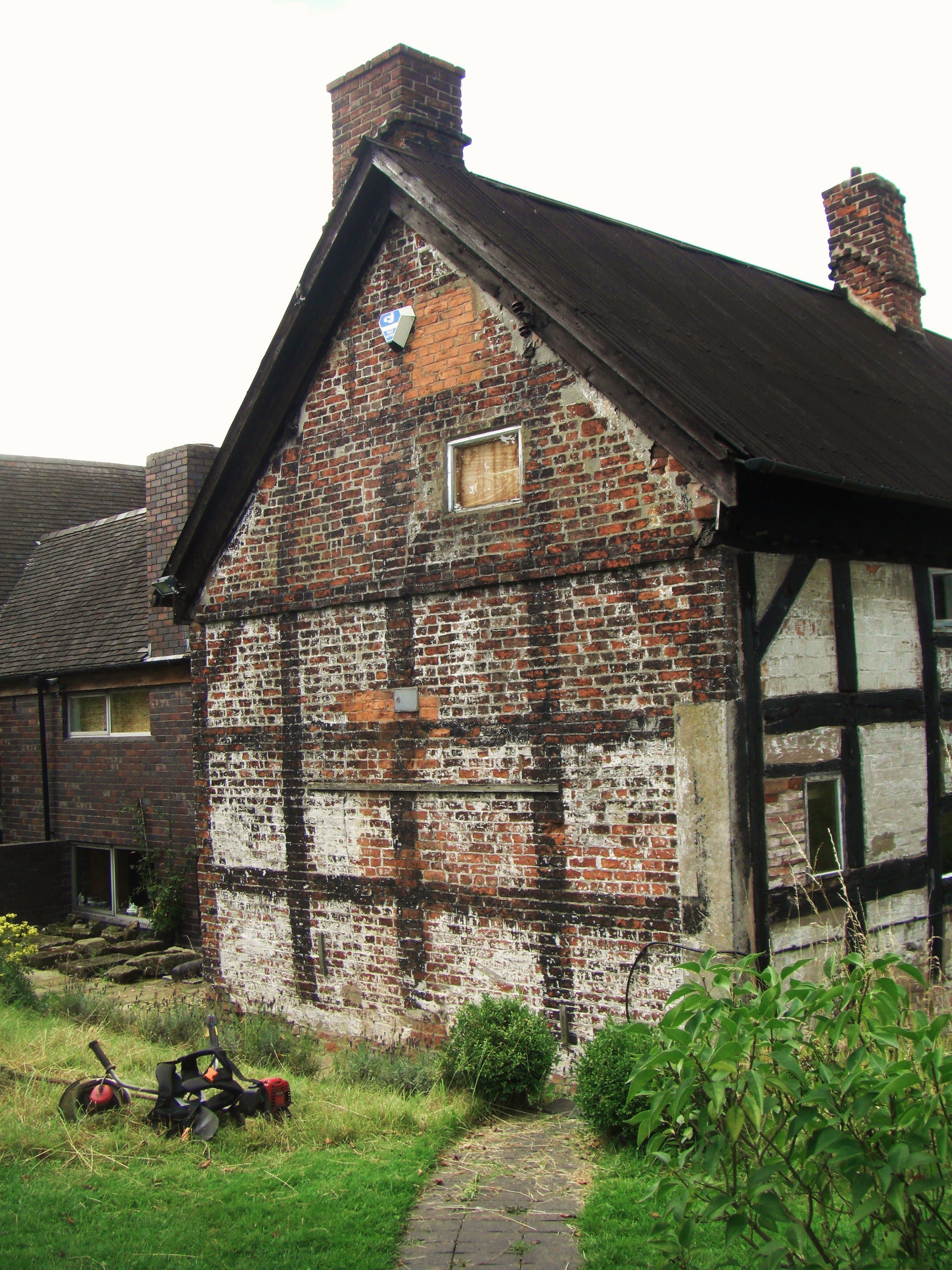
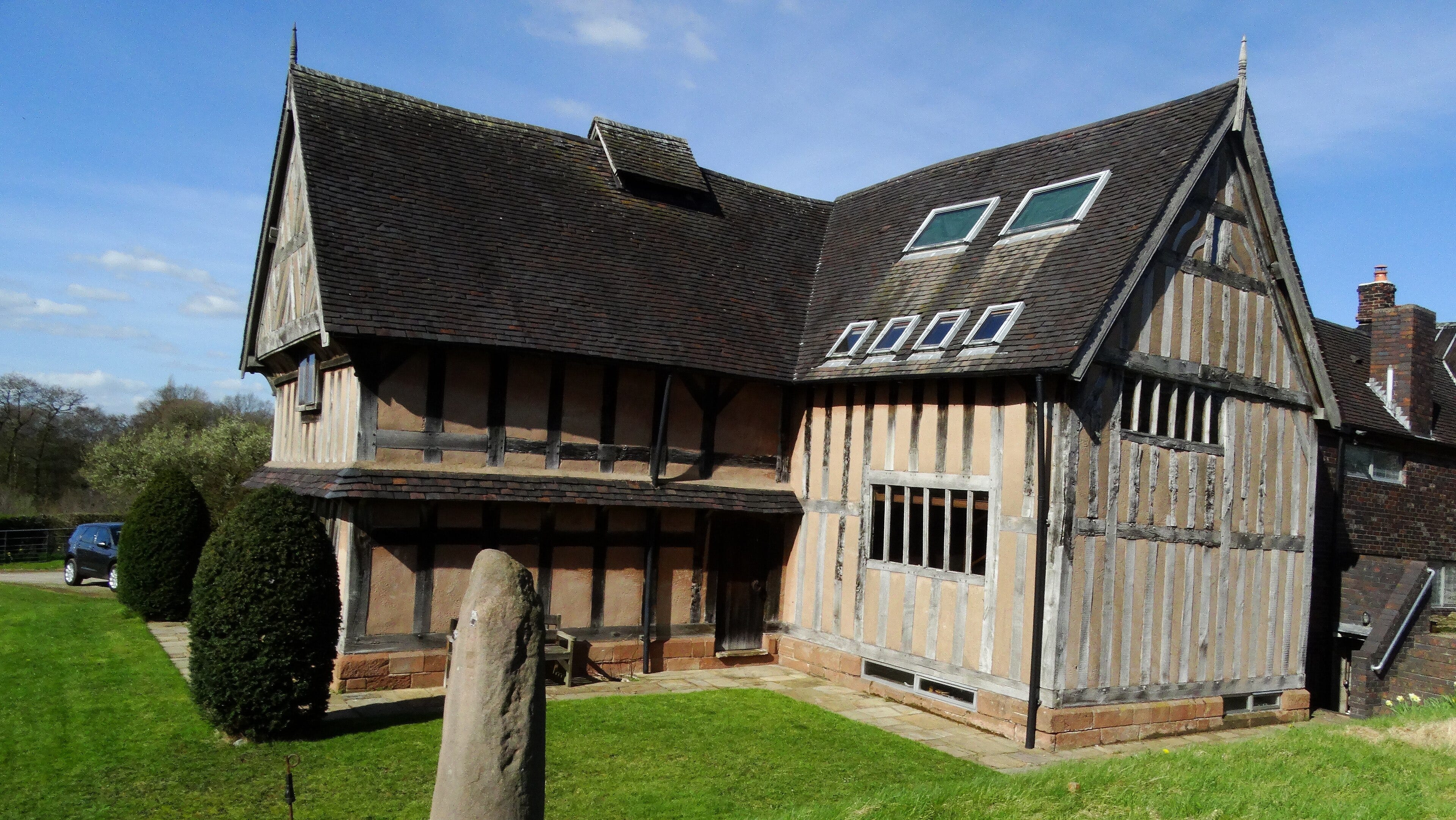
On 19 April 1957, Alan Garner rode his bicycle past the newly finished Lovell Telescope at Jodrell Bank and saw a sign advertising a “17th Century cottage for sale.” As he approached, he realised it was something else: a medieval great hall, miraculously unaltered by time. He thought, “It should not be there. It should not have survived.”6
He went home to tell his father: “I’ve seen the only place I can live.” His old man lent him the £510 to buy the house where Garner has lived ever since. It is called Toad Hall and was built in the 15th Century, but the site has been occupied for over 10,000 years, and sits above a Bronze Age burial mound. In this house, Garner wrote all his novels including Treacle Walker.
When he moved into Toad Hall, it had been divided into two cottages, the other of which was rented by Betty Carter. It was Mrs Carter who “used the railway as a clock.”
The midday train from Manchester to Crewe was called ‘Noony’. By that and the sound of the bell of Goostrey church she set her day. She got up at dawn and went to bed at dusk with the seasons.
When Betty finally moved out, the Borough Council declared the cottage “unfit for human habitation”. A grave irony for a place that had seen ten thousand years of it. To prevent its demolition, Garner secured its Grade II listing. It is now protected by the Blackden Trust. Alan Garner still lives there.
Explore: Blackden Trust and Toad Hall
Narrative framework: Inside Alan Garner’s Cheshire home
5. Treacle Walker
   'What sort of a name is that?'
   'I heal.'
   'Heal. Make better.'
   'All things; save jealousy. Which none can.'
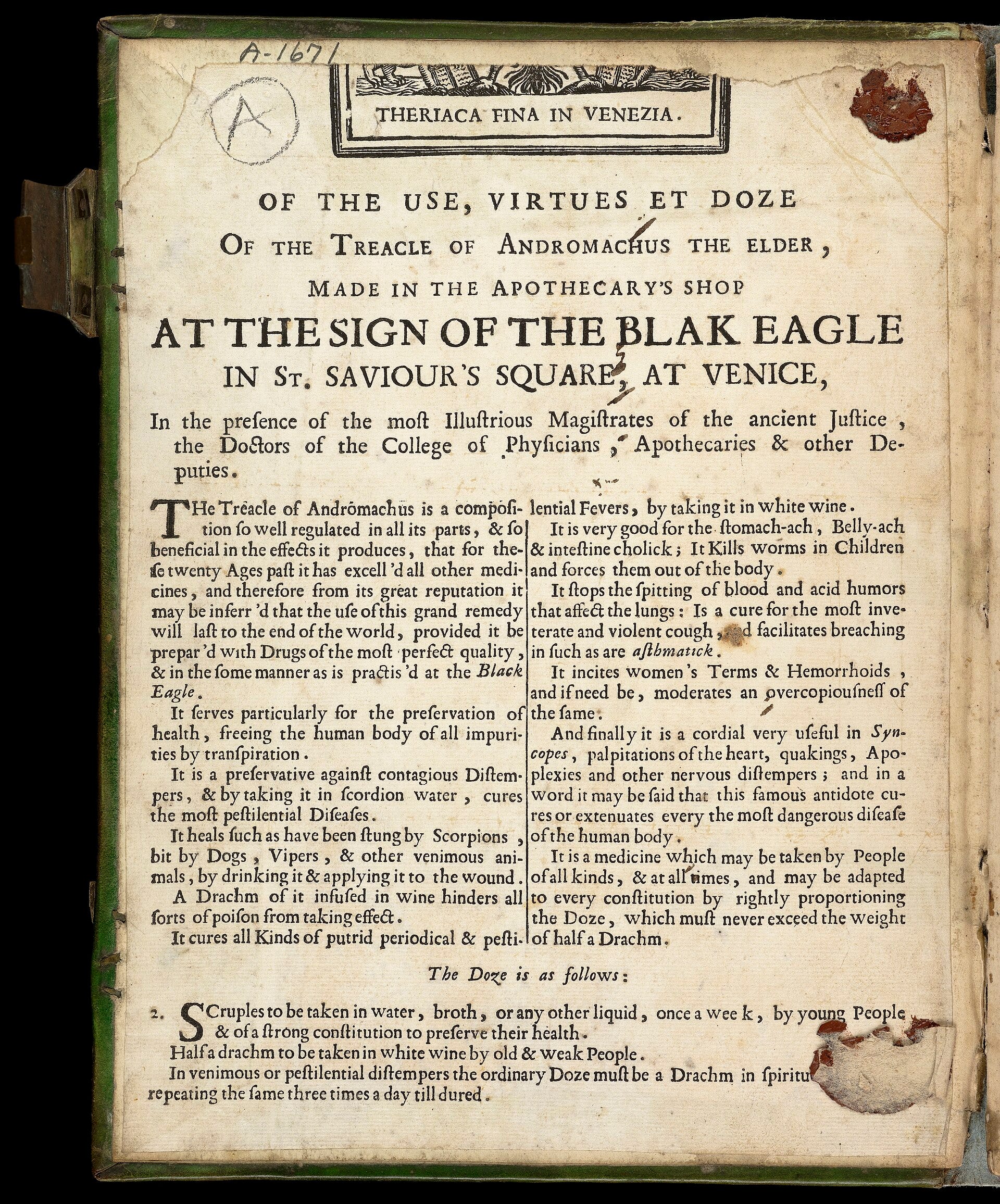
Today we know treacle as a thick sweet syrup used in baking, but for hundreds of years treacle referred to a wide variety of remedies for diseases and antidotes for poisons. Treacle is a panacea, a heal-all. Medieval apothecaries sold many concoctions called theriaca (from ancient Greek, meaning “pertaining to wild animals”). The most expensive of these was Venice Treacle, which contained 64 ingredients including viper’s flesh and opium. As the 1st Duke of Lancaster wrote in 1354 in The Book of Holy Medicines, “the treacle is made of poison so that it can destroy other poisons.”
More: Venice Treacle
Theriac: An ancient brand?
Joe Coppock is sick, so can Treacle Walker heal him?
“At three separate times I died.”
As a child, Alan Garner suffered three long periods of illness, nearly dying of diphtheria, meningitis and then pneumonia. Confined to his bed, Garner was freed from the “rhythms of day and night” and lived the reality of the room and the worlds he found on the ceiling:
There was a forest in the ceiling, with hills and clouds, and a road to the horizon. The way into the ceiling for me was harder at some times than at others. To enter the ceiling, I had to stare at the road and remove detail from the sides of vision by unfocusing my eyes. I had to block sound. I had to switch myself off.7
Switching off is also how Garner has described the creative act of writing. Garner says his childhood sickness left him “too angry to die” and “desperate” to live. “My good fortune”, he writes, “was that I was able, as a child, to know my death, to face the ultimate, before experience scrambled my brains.”
So Joe Coppock is sick, but is he dying? Is he dead? Why is he home alone? Where are his parents? Is this house real? Or some place inside Joe’s mind as he lies looking up at the ceiling?
Garner considers how he entered the ceiling:
“Switching off” is not a good description, because there was a profound engagement in the activity of making the bed-bound “me” let go of me. I had to remove myself from that. I would concentrate on the concentration of the “me” concentrating. I thought of the thought of myself thinking. I observed the observer observing; until the observer was not the observed.
The Old Medicine House
By 1970, the Garner family was growing, and the old medieval hall needed to be expanded to accommodate their needs. The problem of enlarging an ancient timber-frame house was solved by the discovery of an old Tudor house, threatened with demolition, eighteen miles away in Wrinehill. Rather than scavenging the building for bays and beams, the Garners decided to dismantle the entire house and reassemble it next to Toad Hall. Garner notes:
Now we had a prehistoric and a religious site, a rare medieval survivor and a Tudor masterpiece.
This Tudor House was known as the Old Medicine House because, from 1870 until 1969, it was the “factory” for the patented medicines of Samuel Johnson. Not the dictionary man, and not another Cheshire Samuel Johnson who we will meet shortly.
It is inside this Old Medicine House that we find the vast Tudor chimney that reappears here in Treacle Walker. Alan Garner sits within it beside his firepit, below a 27-foot chimney stack. It is where Joe sits. A place between worlds where stories come. “The chimney wrote Treacle Walker,” Garner once said. “I didn’t.”
6. Poor Man’s Friend
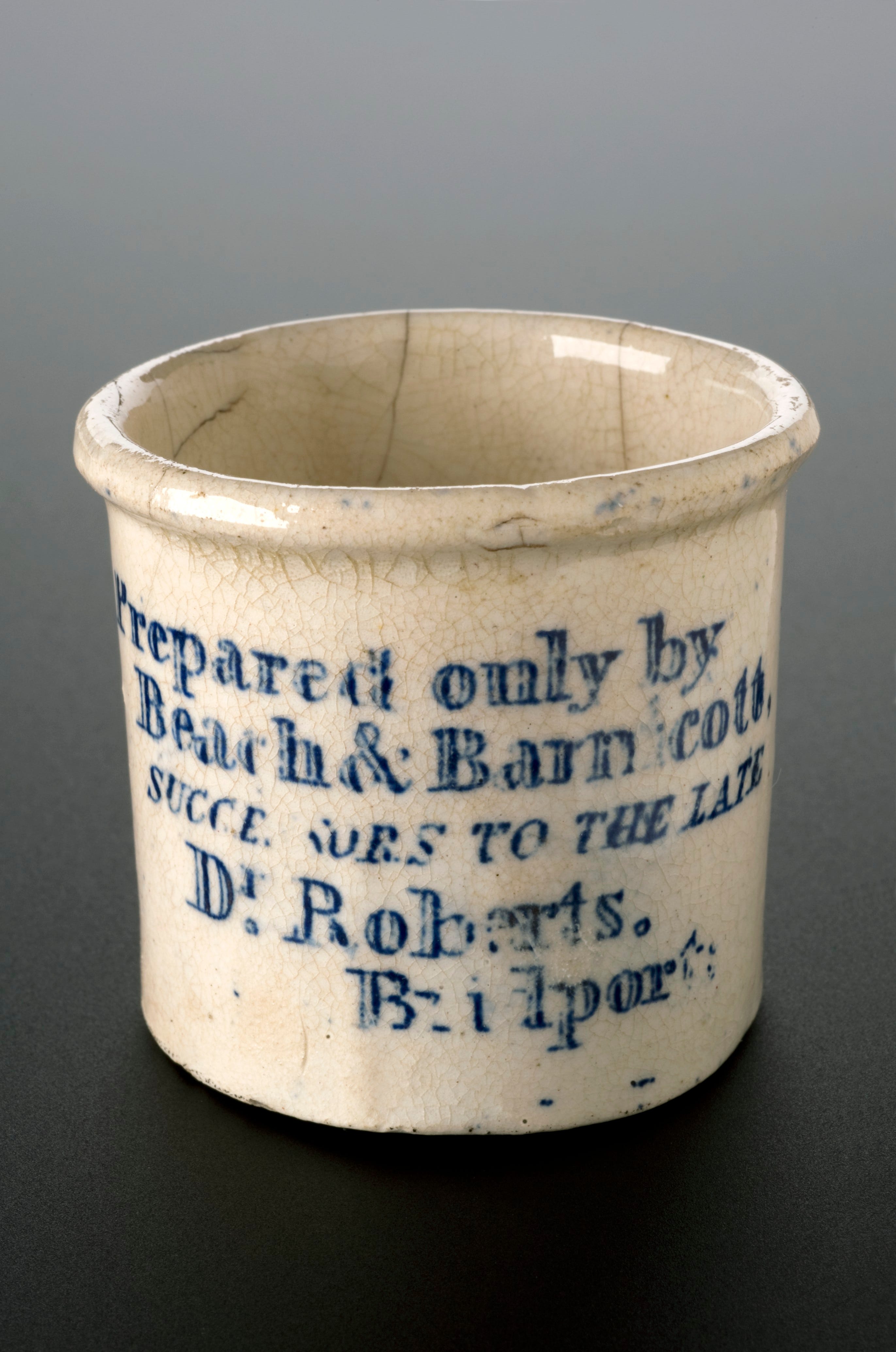
The dispensing pot that Treacle Walker gives Joe Coppock is a real artefact. Giles Laurence Roberts was born in 1766 in Bridport, Dorset. As a young man, he developed a passion for herbal remedies. Although unqualified, he set himself up as an apothecary and became successful. He studied anatomy in London and probably bought his medical degree from King’s College Aberdeen, so that he could call himself Dr Roberts.
His patented remedy Poor Man’s Friend made him famous and was sold across the country. It could still be purchased in the mid-20th century. However, its ingredients remained secret until 2003 when the recipe was bought by a museum in his hometown of Bridport. Dr Roberts’ concoction contained mostly lard and beeswax, but also a dangerous mix of mercurous chloride, sugar of lead, mercuric oxide, zinc oxide, and bismuth oxide. In all its day, it did more harm than heal.
Miracle cure: Secret recipe made public
Watch: The Amazing Story of Dr Roberts and Poor Man’s Friend
7. The outline of a horse
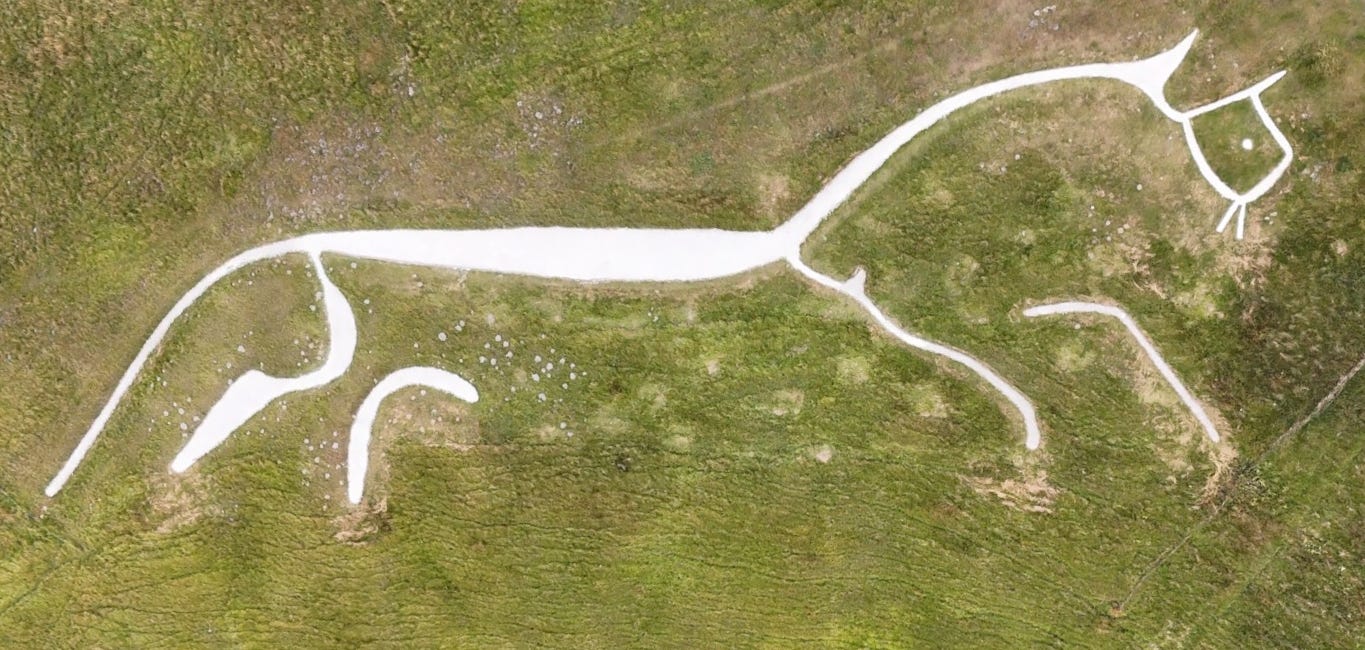
He picked up the stone. The cut horse stretched. The line of the body, tail and legs was made of five curves; the head square, the eye a dot, the ears two spikes, the muzzle an open beak.
Joe’s donkey stone is marked with the outline of the Uffington White Horse in Oxfordshire, an 110-metre-long prehistoric hill figure. It was created three thousand years ago during the late Bronze Age by digging deep trenches and filling them with white chalk.
The most remarkable fact about the Uffington White Horse is that it must be maintained by a process of weeding and adding new chalk. This is called scouring, and the monument's survival means that for three thousand years local inhabitants have preserved it.
We may consider it a collaborative project that began with the Celts, continued by the Romano-Britons, Saxons, and Christians, and continues to the modern day. It makes it arguably the oldest permanently used sacred site in the world. Different peoples with different religions have continued to regard it as a place with meaning and significance.
By scouring his doorstep with the white horse, Joe is somehow participating in this ancient ritual, drawing the power of that place into his home.
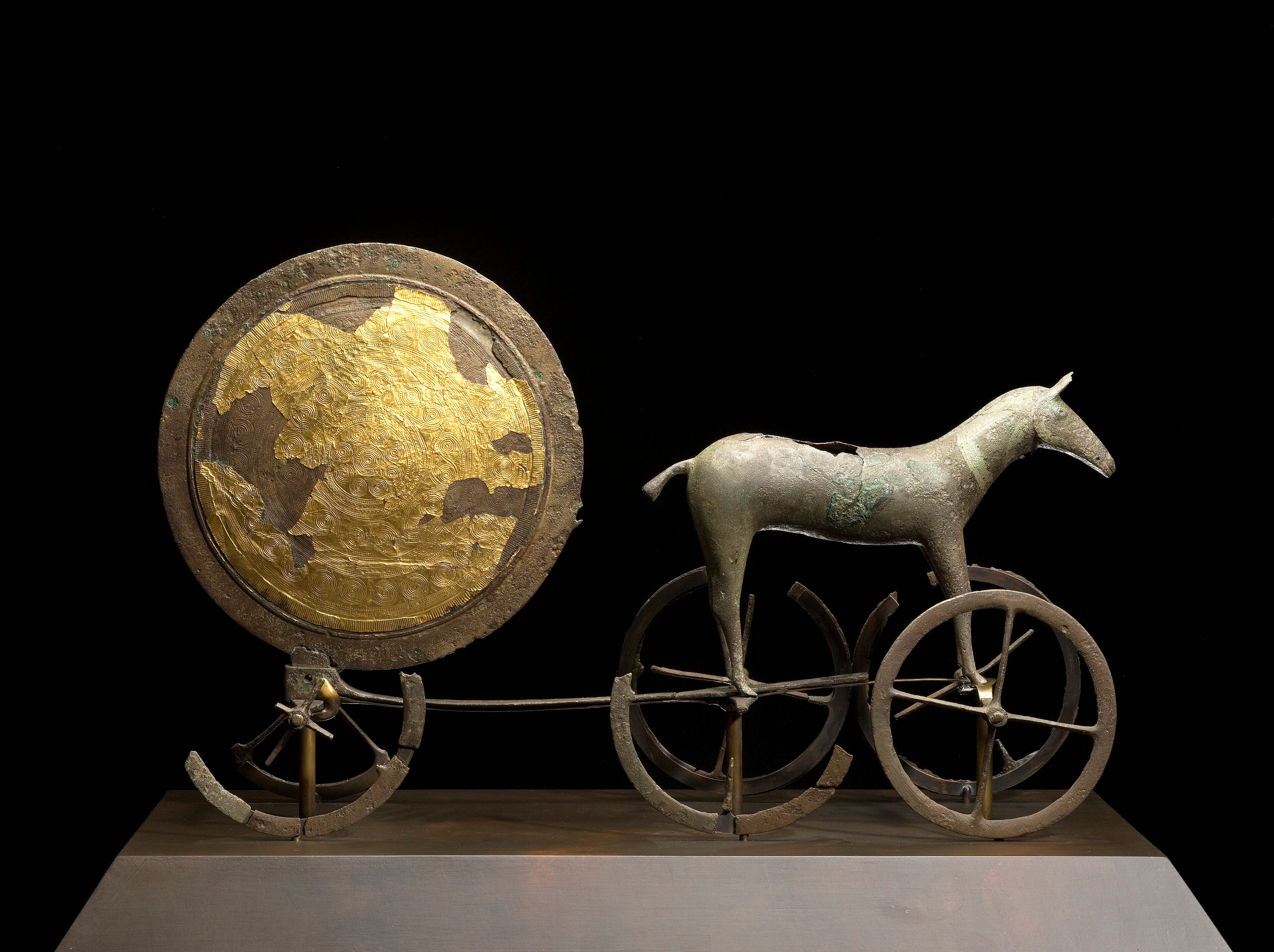
But what does the white horse mean? Now there is a rabbit hole! Remember that Treacle Walker’s cart is pulled by a white pony. Both may be linked to the “solar horse” motif found across many ancient Indo-European cultures. We may wonder why the prehistoric Britons depicted a horse in motion that could only be seen in full from the sky. We may wonder why Treacle Walker appears always at Midday, when Noony rattles past the house.
Digs and discoveries: White horse of the sun
Tangent: The Trundholm Sun Chariot
8. Speaking broad
Alan Garner was raised in the Cheshire dialect that he calls North West Mercian. It is closely related to the Middle English of Sir Gawain and the Green Knight, a fourteenth-century romance that was likely composed near to where Garner grew up. Indeed, a young Garner wondered why the text needed so many footnotes when his grandfather (“an unlettered smith”) could have understood it with ease.8 He recalls:
This was what I knew as “talking broad”. I had had my mouth washed out with carbolic soap for speaking that way when I was five years old.9
When Garner came to write, he understood that if he was to say anything meaningful about his place in the world, he would have to let his native tongue speak. His characters “speak broad,” and those of us not raised in it may be thankful for some footnotes:
“Cob you! Cob you, then!”
Cob is to throw or a blow to the head. “Cob you” is a way of telling someone to shove off and go away.
“I don’t care. It’s grand. Grand as owt.”
Owt is anything. Nowt is nothing. As someone raised in Yorkshire, I knew the Yorkshireman’s motto by heart. See if you can make sense of it:
Ear all, see all, say nowt; Eyt all, sup all, pay nowt; And if ivver tha does owt fer nowt; Allus do it fer thissen.
“Blinking heck!”
A milder alternative to bloody hell.
“The craven nidget who flees the dark and will not come back till morning.”
A nidget is an idiot, so Treacle Walker is calling the sun a cowardly fool. Why?
“One road, it’s old. The other, it’s not.”
Road is a synonym for way, as in “Any road” in place of “Anyway”. Joe is saying that one side of Treacle Walker’s face looks old, while the other looks young.
“Wellaway.”
Alas or woe; Treacle Walker is commiserating with Joe’s “blooming eye”; or perhaps remarking on his own appearance.
“You and your hurlolomperjobs. I near cacked me.”
Joe was so scared he almost soiled himself.
“Eh up!”
An exclamation of surprise.
“I’m not faffing.”
To faff is to muck about and waste time.
“Give over!”
Joe is telling the cuckoo to stop mucking about!
“Right, then! If that’s the game, I’m out! No barleys!”
Essential schoolyard slang: to call barley is to call truce and time out. Joe wants no truce with the cuckoo; he admits defeat and calls game over.
“Why the stramash, Joseph Coppock.”
A tumult or disturbance. Joe has woken up Thin Amren.
“Move the dish clout and shut your glims.”
Thin Amren calls Joe’s eyepatch a dishcloth, and glims are lights, lamps or eyes.
A hurlothrumbo of winter
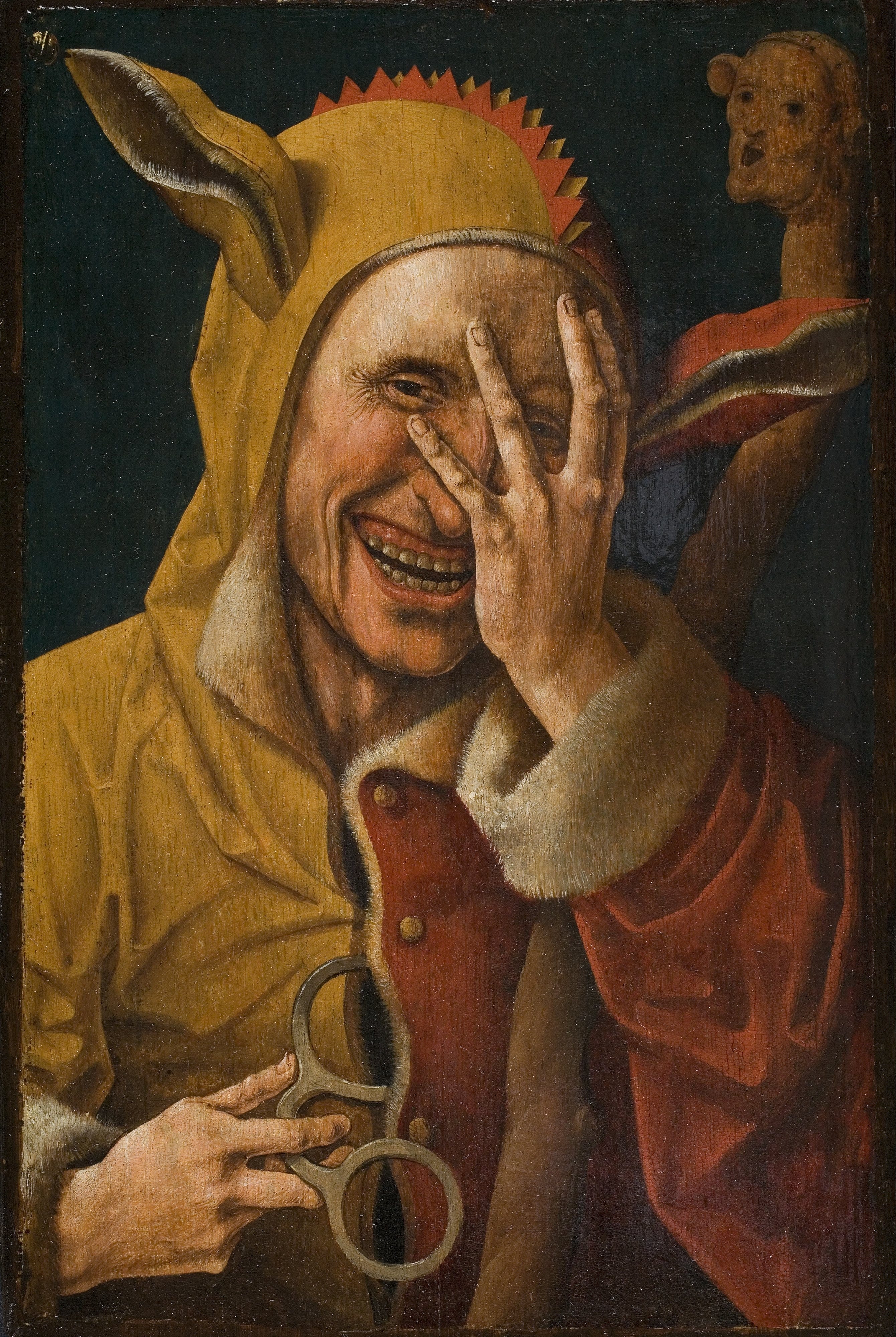
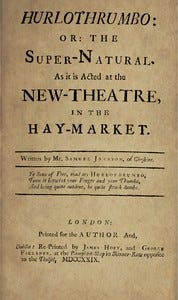
So what then is a hurlothrumbo? It is not Cheshire dialect, but it is from Cheshire. “Hurlothrumbo or, The super-natural” was an 18th-century English nonsense play written by Samuel “Maggoty” Johnson. The play opened at the Theatre Royal Haymarket in 1729 and was an inexplicable success, running for 50 nights, the must-see show of the season. Hurlothrumbo and lomperhomock are both characters in the play, which was described at the time as “odd, whimsical and original” – not unlike the reception of Treacle Walker in 2022.
Samuel Johnson was from Cheshire and known as the last professional jester in England. He appeared in the play as Lord Flame, playing his fiddle and walking on high-stilts. He is mentioned in Henry Fielding’s novel Tom Jones:
Thus the famous author of Hurlothrumbo told a learned bishop, that the reason his lordship could not taste the excellence of his piece was, that he did not read it with a fiddle in his hand; which instrument he himself had always had in his own, when he composed it.
Johnson lies buried in Maggoty Wood, near Alan Garner’s home. The inscription on his grave reads: “No friend and he should quarrel for a Bone.”
Like any good fool, no one knows whether to take Johnson’s work seriously or not. In the epilogue to Hurlothrumbo, a poet says “Why here’s no Plot! or none that’s understood.” The play deals with themes of sleep and dreams, sun and stars. Like Treacle Walker, it sounds like a riddle wrapped in an enigma. The character Hurlothrumbo could be Treacle Walker himself: “This World is all a Dream, an Outside, a Dung-hill paved with Diamonds.”
Grub Street Review: Hurlothrumbo by Samuel ‘Maggoty’ Johnson
9. The oldest tune
It was a tune with wings, trampling things, tightened strings, boggarts and bogles and brags on their feet; the man in the oak, sickness and fever, that set in long, lasting sleep the whole great world with the sweetness of sound the bone did play.
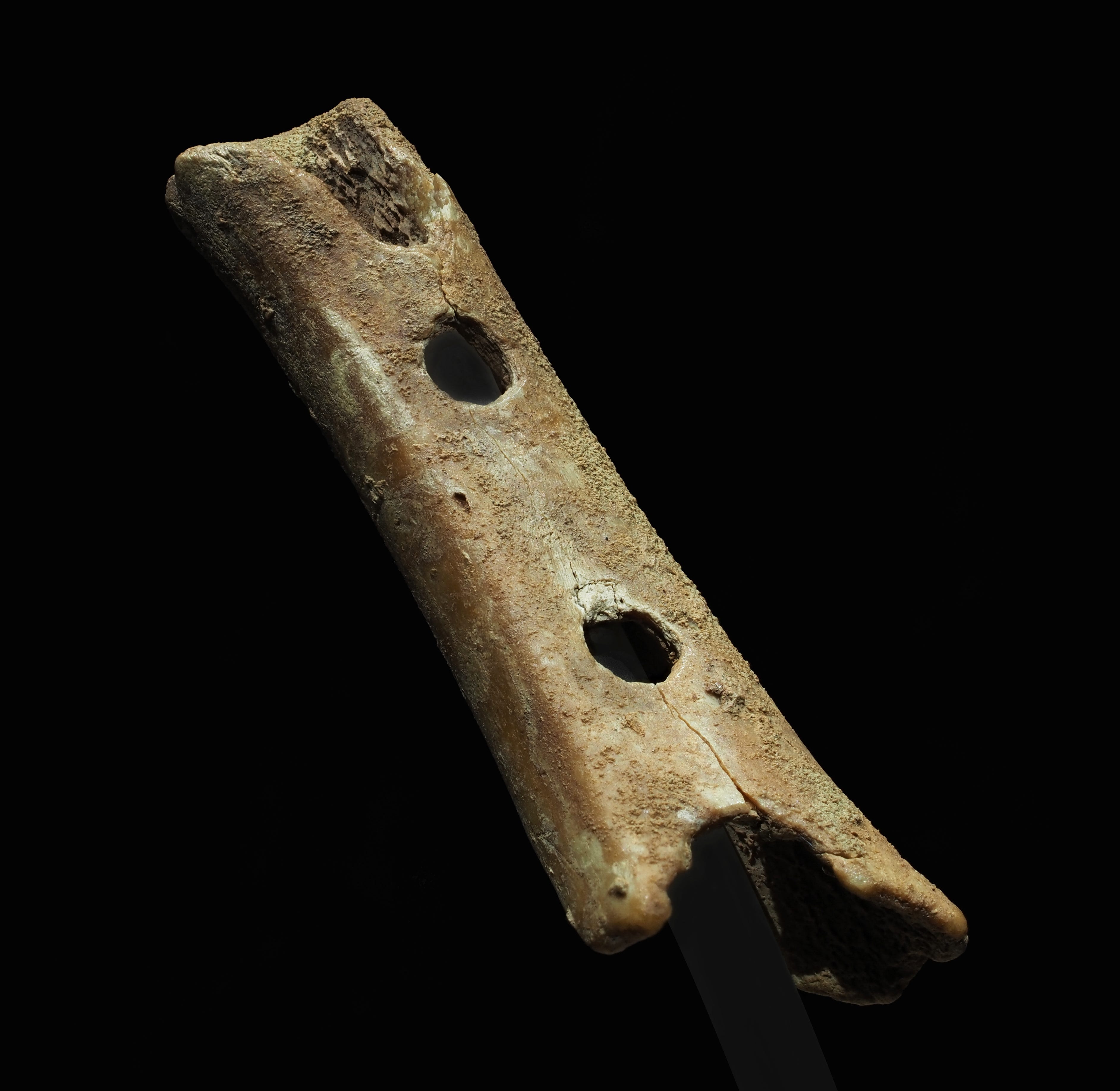
Bone flutes are among the oldest musical instruments we have unearthed, evidence of prehistoric music dating back as far as 60,000 years. There is even a flute made from a cave bear femur found in Slovenia that some attribute to Neanderthals, a nice link to our previous slow read of The Inheritors.
Elsewhere, there is evidence that Bronze Age people living in the region of Stonehenge made flutes from human bones. “I made it from a man that sang,” says Treacle Walker. “It is the way for him to sing now.” If that man lived 3,000 years ago, then Treacle Walker really is as old as he looks. But then again, time is ignorance.
More: Some Bronze Age Britons turned the bones of dead relatives into musical instruments
The Brothers Grim: The Singing Bone
10. The Cuckoo’s call
   'What's so funny?' said Joe.
   'I'm laughing for the joy of meeting such a high-learnt cuckoo young-feller-me-lad as yourself.'
In European folklore, the cuckoo’s call announces the start of spring. The popular thirteenth-century ballad Sumer Is Icumen In begins:
Sumer is icumen in
Loude sing cuckou!
Groweth seed and bloweth meed
And springth the wode now
Sing cuckou!
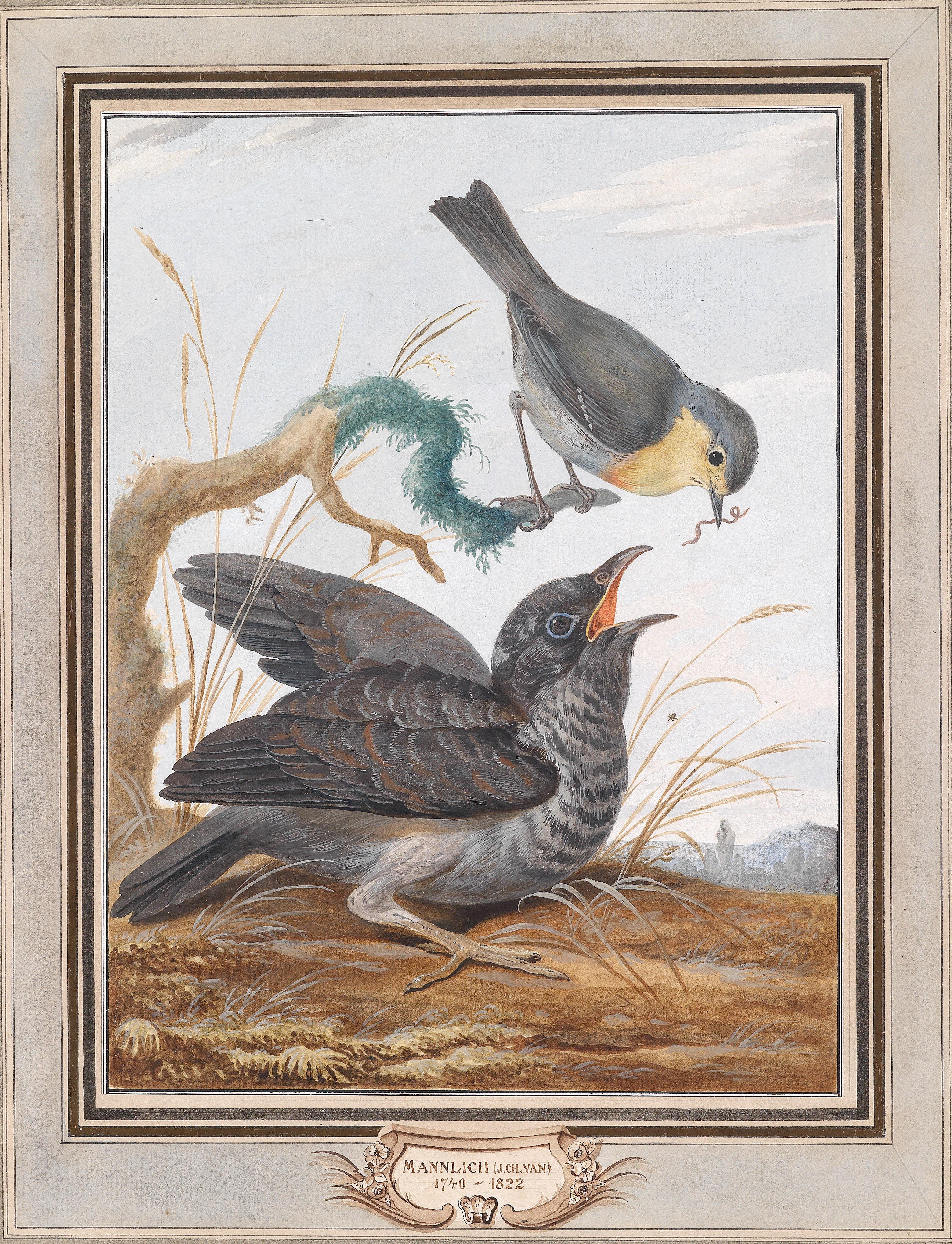
Associated with spring, you might think the cuckoo’s call is welcome. But then there is something slightly unnerving about a bird that is sometimes heard but rarely seen, its call drifting up the valley, and disappearing in winter. One folk belief was that the cuckoo transformed into a sparrowhawk for half the year.
The cuckoo also has a sinister reputation as a parasite and imposter, laying its eggs in other birds’ nests. From this we get cuckoldry and John Wyndham’s dark tale of alien insemination, The Midwich Cuckoos. And of course this is why Joe’s mission to find a cuckoo’s egg is something of a fool's errand.
Treacle Walker looked out across the valley.
“Iram, biram, brendon, bo
Where did all the children go?
They went to the east. They went to the west.
They went where the cuckoo has its nest.”
Of course, the cuckoo has no nest. The verse comes from Alan Garner’s reworking of a creepy fairy tale, also known as “The Pear Drum,” originally written as “The New Mother” by Victorian novelist Lucy Clifford. Clifford’s story tells of two girls who are tempted by a wild girl to be naughty with the promise of a “pear drum”. Their mother leaves them, and a new mother takes her place, with glass eyes and a wooden tail.
Another tangent. In a 1989 interview, Alan Garner talks about his relationship with his father and how he was “a cuckoo in the nest.” Garner has often spoken about the impossibility of going back to his childhood – how his education altered his relationship to his family and his past. Treacle Walker may dramatise that sense of loss and the person the writer once was and could have been, but will never be again.
11. Bog people
A few months before I was born, in May 1983, a human head was discovered in a peat bog on Lindow Moss, Cheshire. The skull looked as if it had been recently buried, with skin and hair intact. A cold case was reopened of a woman who disappeared in 1959, and the fresh evidence secured a confession of murder from her husband. But the skull was in fact much older.
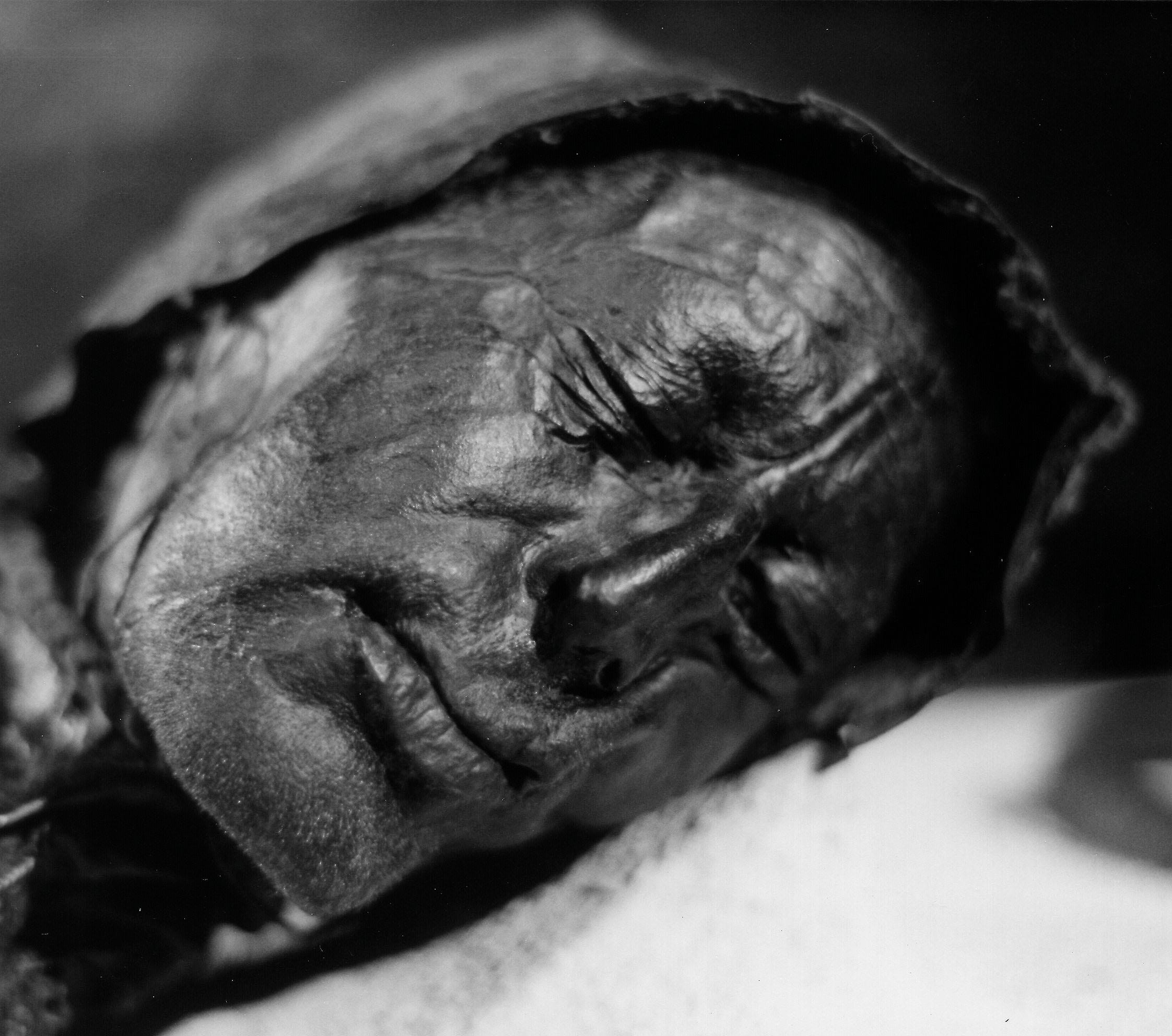
This was Lindow Woman, nearly 2,000 years old. The next year, a body was recovered from the bog, the best-preserved body ever to be found in Britain. This was Lindow Man, also known as Pete March or Pete Bog.
Hundreds of these bog bodies have been found across northern Europe. One of the most famous is Tollund Man in Denmark. Many show evidence of elaborate murders that may point to sacrifice. There is something deeply troubling and affecting about these preserved bodies and their mysterious deaths. Tollund Man looks like he lay down to sleep yesterday, and here he is. Time is ignorance.
Mystery: The mystery of the human sacrifices buried in Europe’s bogs
More: Europe’s Famed Bog Bodies Are Starting to Reveal Their Secrets
Seamus Heaney wrote a series of poems about these bog bodies. Here is a verse from “The Grauballe Man”:
Who will say ‘corpse’
to his vivid cast?
Who will say ‘body’
to his opaque repose?
Read: Heaney’s bog poems
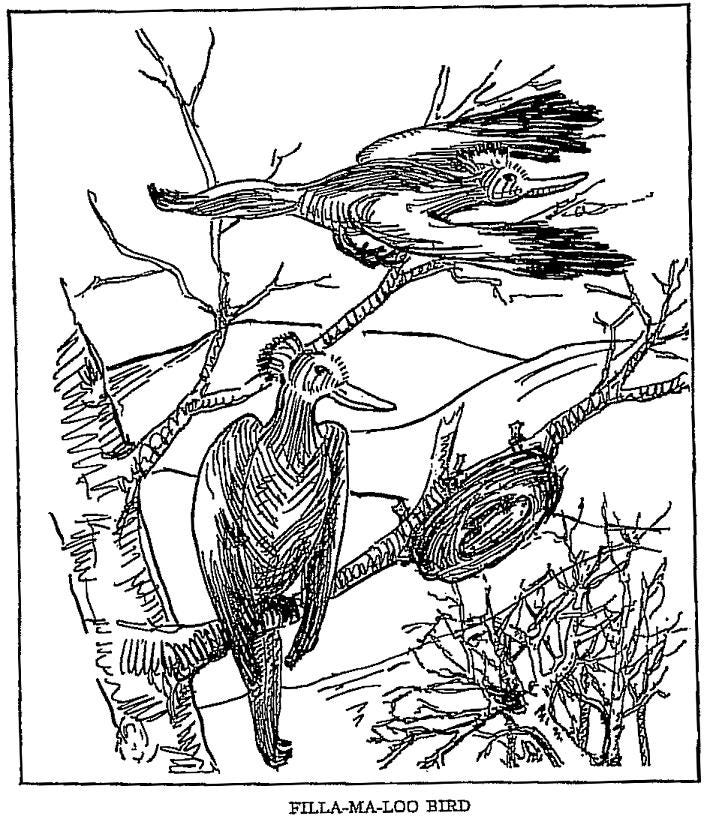
12. What sees is seen
Thin Amren assures Joe that he will be “fine as filliloo” once he masters his glamourie. Reassuring perhaps, unless he is referring to the mythical Filla-Ma-Loo or Goofus Bird of North American folklore, that flies backwards and builds its nests upside down.
Alan Garner’s essays often circle back to the need for both science and story, our intellectual faculties and our creative imagination, the literal and the numinous. We have two eyes, and one has the glamourie (ie. can see and do magic), but we need both to get where we’re going.
What do you think?
‘You have the glamourie,’ said the man. ‘In just the one. And that’s no bad thing, if you have the knowing. She’ll be the governor while you learn the hang of it, and when you’ve got that you’ll be fine as filliloo. But you need the both of them. What sees is seen.’

Thank you
Thank you for reading and joining me on this slow read of Treacle Walker by Alan Garner. On my website, Footnotes & Tangents, you can find the reading schedule and a list of further resources to continue your journey.
Next week, we will read chapters VII-XII.
I rely so much on all of you to help spread the word about these slow reads. So I would be enormously grateful if you could like and share this post and podcast, and let friends and family know about it, so I can keep making these guides and help more readers discover the joy of slow reading. Thanks again.
Until next time, I am your guide, Simon Haisell, and this is Footnotes & Tangents.

Alan Garner, “Achilles in Altjira”, The Voice That Thunders.
But then again, there is plenty of wisdom to be found in childish nonsense.
Alan Garner, “Powsels and Thrums”, Powsels and Thrums.
Alan Garner, “Powsels and Thrums”, Powsels and Thrums.
L’Histoire, April 3, 1870
Alan Garner, “Up Them Fields and What Was Found There”, Powsels and Thrums.
Alan Garner, “The Edge of the Ceiling”, The Voice That Thunders.
“Years after my surprised reading of Sir Gawain and the Green Knight, Professor Ralph Elliott, Master of University House at the Australian National University, told me that I could be the first writer in 600 years to emerge from the same linguistic stock as the Gawain poet and to draw on the same landscape for its expression. Then I felt humbled, and, above all, responsible; responsible for both my dialects, and for their feeding. I saw, too, why little after The Tempest in English literature had said anything to me.
Alan Garner, “Achilles in Altjira”, The Voice That Thunders.


.jpeg)


.jpg)


