
THREAD: Suggest a slow read for 2027
Links to all 12 book guides • Polls: 2027 reruns & James Joyce's Ulysses

Hi, I’m Simon Haisell, the host of Footnotes & Tangents, a book group where we take our time to live inside great stories. This is my monthly newsletter, Endnotes. If you’re new here, check out the welcome post to find out what it is all about.
This month, I want to ask you which books you would like to see featured on Footnotes & Tangents in 2027 and beyond.
What would you like to read with us in 2027?
Do you have a favourite book that rewards the slow reader?
Is there a book you want to read but are intimidated to start?
In the comments, please leave your suggestions with THE BOOK TITLE in capital letters to help fellow readers find the books that interest them.
Footnotes & Tangents is an invitation to slow down, notice more and share your journey with companion readers. I am interested in exploring books that we may find intimidating or challenging, as well as those that reward the careful re-reader.
I have now written 12 book guides and 170 posts to accompany our read-alongs.
Book guides
Free
Things Fall Apart by Chinua Achebe (5 posts)
The Siege of Krishnapur by JG Farrell (9 posts)
A Place of Greater Safety by Hilary Mantel (20 posts)
The Blue Flower by Penelope Fitzgerald (7 posts)
For paid subscribers
Regeneration by Pat Barker (7 posts)
Treacle Walker by Alan Garner (3 posts)
The Inheritors by William Golding (4 posts)
Wolf Hall by Hilary Mantel (17 posts)
Bring Up the Bodies by Hilary Mantel (12 posts)
The Mirror and the Light by Hilary Mantel (23 posts)
Midnight’s Children by Salman Rushdie (13 posts)
War and Peace by Leo Tolstoy (50 posts)
Current and upcoming slow reads
Wolf Crawl has just begun The Mirror and the Light, the final instalment of Hilary Mantel’s Cromwell trilogy.
September: We start AS Byatt’s The Children’s Book.
Are you interested in War and Peace or Wolf Crawl in 2027?
I need to decide whether to re-run our two big year-long read-alongs next year. To be clear, all the materials and resources for these slow reads are available as book guides you can read at any time, at your own pace. However, I can set up a reading schedule and email alerts for anyone interested in reading the books as a year-long challenge. Let me know in the poll.
Marginalia: The Inheritors and Treacle Walker
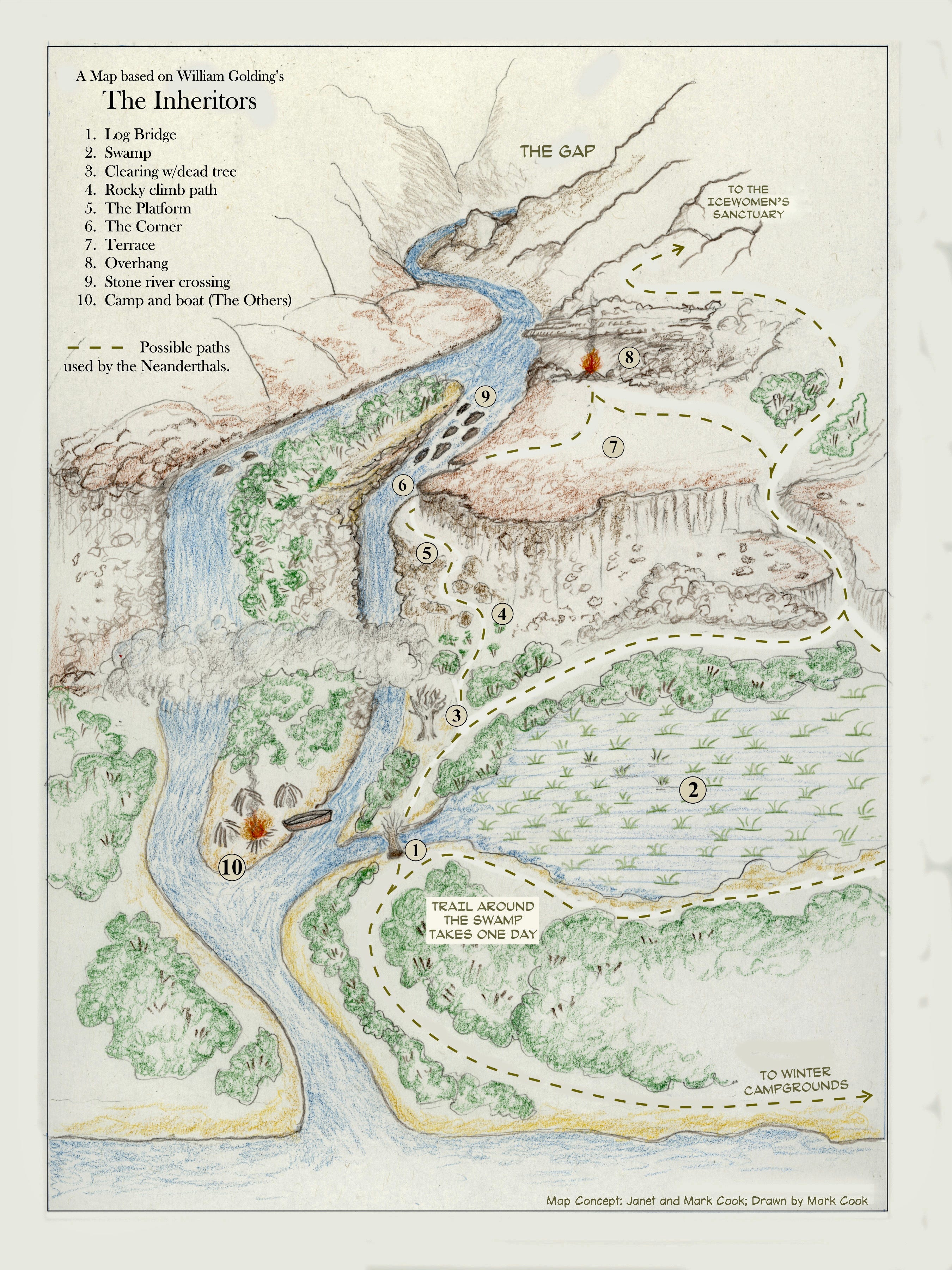
One of my favourite things about these slow reads is how they inspire readers to start side projects that complement and enrich the read-alongs. Like many of us, Janet Cook and her husband found the geography of The Inheritors bewildering. We see everything through the eyes of William Golding’s Neanderthal family, and their emphasis on sound and smell makes their world hard to visualise. So Janet and Mark pieced all the information together and made this brilliant map for us. Thank you both!
Returning to Alan Garner’s Treacle Walker has been a profound joy. It is a book that rewards careful reading, instils wonder and invites curiosity and creativity. It is a sort of urtext for Footnotes & Tangents, and July’s slow read generated many exciting interpretations and insights. And the read-along inspired Laura Crow to head up to Alderley Edge and record this short film about the Legend of Alderley. I hope this is the start of a series, Laura!
My recent read: Ulysses by James Joyce
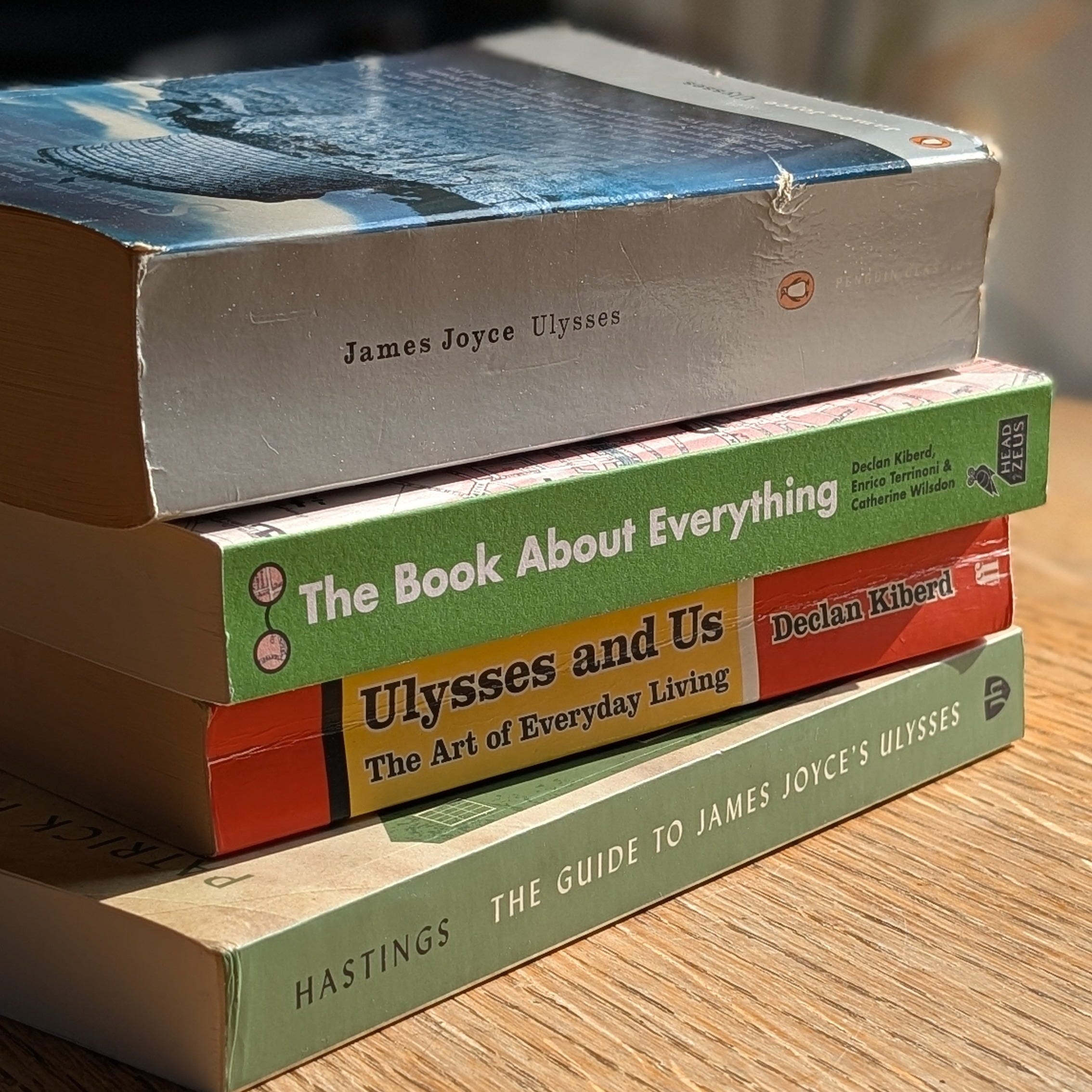
So I did a thing. I read Ulysses! Actually, I listened to it twice. After each of the eighteen episodes, I read and listened to corresponding chapters from four supplementary books on Ulysses. I then listened to a different recording of the same episode. It was immensely satisfying to see how much more I noticed and understood on a second read. The book really began to sing.
And YES, what a book! It is such a joy, brimming with life; funny, clever, irreverent, inventive, life-affirming and humane. Can we call it sublime? Yes, let’s call it sublime. A feast of words and an enormous celebration of the everyday and the everyman. A book about everything that invites the reader in and then sends them out into the world to live and learn and create.
Yes I will re-read Ulysses yes I will Yes. It is a peculiar book (retrospectively) arranged in such a way that requires you to have already read the book in order to better understand it. But it says to you, don’t worry: go with the flow. Each time you come back to me, I’ll show you something new.
Oh, I am tempted! It fits the bill: a book that intimidates many but is far more fun and much more accessible than its reputation suggests. A wise book with a lifetime’s worth of rabbit holes, footnotes and tangents. A book that has my heart. But organising a read-along and writing the accompanying guide would be a great undertaking. And with such a wealth of support for reading Ulysses already out there, I need to be clear about what makes Footnotes & Tangents distinctive.
Ulysses is a book for everyone. And our slow reads are about everyone finding confidence in their own reading. There are as many ways to read as there are readers, and Footnotes & Tangents is above all a celebration of the democratic and inclusive spirit of reading and the plurality of interpretation.
So, I need you to talk me into or out of a slow read of Ulysses in the comments. And while you’re at it, suggest books you’d love to see us slow read in 2027 and beyond.
And please stick THE BOOK TITLE in capital letters so that other readers can find the books that interest them.
Wishing you all wild and wonderful reading. Until next time,
Middlemarch by George Elliot!
Anna Karenina! Or the Brothers Karamazov